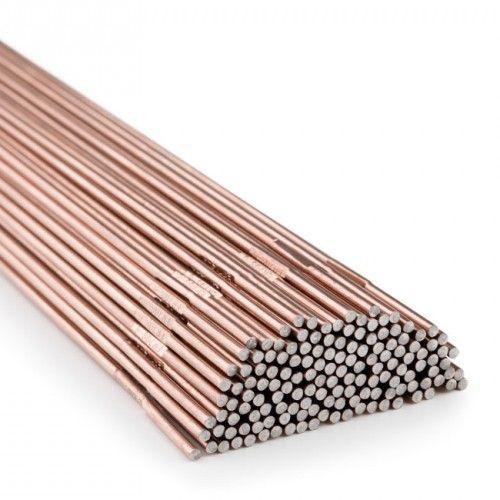
Copper and silver brazing rods are filler metals used to join metals, with silver brazing offering high strength, good electrical conductivity, and lower melting points for joining dissimilar metals like copper, brass, and steel, while copper brazing (often copper-phosphorus) is excellent for joining copper-to-copper, creating strong capillary joints, especially in HVAC, plumbing, and electrical work, often without flux for copper-to-copper. They differ in composition, melting temperatures, and application suitability, with silver rods providing versatility for diverse materials and copper rods focusing on copper-based systems. Copper Brazing Rods Composition: Primarily copper, often with phosphorus (e.g., CuP-5 alloys like 89% Cu, 5% Ag, 6% P). Key Feature: When joining copper to copper, phosphorus acts as a flux, making them self-fluxing and ideal for plumbing, refrigeration, and HVAC lines. Applications: Joining copper, brass, bronze, and some steels; excellent for capillary action in tight joints. Silver Brazing Rods (Silver Solder) Composition: Varying amounts of silver, copper, zinc, and other elements, often with lower silver content in general purpose rods. Key Feature: Lower melting points than base metals, excellent flow (capillary action), and high strength, allowing joining of dissimilar metals. Applications: Joining copper, brass, steel, stainless steel, carbide; used in electronics, jewelry, automotive, and general metal fabrication.
Zirakpur, India, 140603