
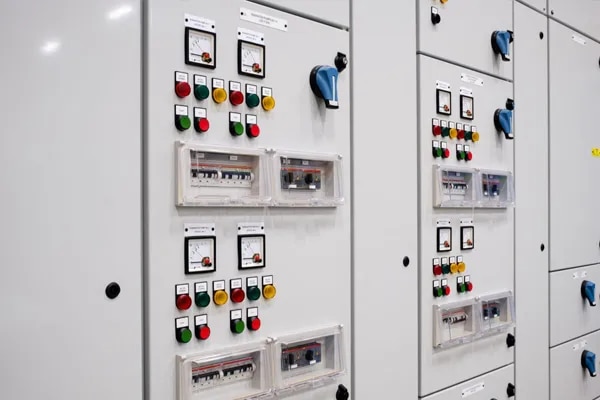
Electric and Electronic Controls
Description
Electric and Electronic Controls refer to systems that manage and regulate electrical energy flow for automated tasks, with electrical controls often handling higher power for physical actions (like motors) using switches and relays, while electronic controls use semiconductor components (like PLCs, transistors) to process signals for logic, data, and precise regulation, forming the backbone of industrial automation, home appliances, and complex machinery. They work together, using sensors to detect inputs, controllers to process them, and actuators to produce outputs, ensuring efficiency, protection, and desired system responses.
Electrical Controls
Focus: Direct control of power flow for mechanical work, managing energy conversion to light, heat, or motion.
Components: Switches, contactors, relays, motor starters, circuit breakers, often dealing with higher voltages/currents.
Function: Start/stop motors, switch circuits, provide protection, regulate power distribution.