Compressor oil performs several critical functions inside a refrigeration system. It lubricates bearings and other moving parts, supports sealing, reduces friction, and helps remove heat from the compressor. Using the wrong oil can lead to poor oil return, internal wear, chemical instability, and eventually compressor failure.
Mahesh Refrigeration Company works with refrigeration contractors, maintenance teams, and equipment users throughout Chandigarh Tricity. A basic understanding of compressor oil helps buyers distinguish between oils that merely look similar and oils that are technically compatible with their systems.
What Compressor Oil Does
A refrigeration compressor operates continuously or in repeated cycles under changing pressures and temperatures. Lubricant creates a protective film between moving surfaces and limits metal-to-metal contact.
Unlike oil in many other machines, refrigeration oil circulates partly with the refrigerant. It must travel through the system and return to the compressor without accumulating excessively in the evaporator or pipework. Its behaviour at low temperatures is therefore just as important as its performance inside a hot compressor.
Main Types of Refrigeration Compressor Oil
Mineral Oil
Mineral oil has traditionally been used with several older refrigerants and compressor designs. It is available in different viscosity grades and should be selected according to the compressor manufacturer’s recommendations.
Alkylbenzene Oil
Alkylbenzene oil is used in certain commercial refrigeration applications. It can offer good thermal stability and low-temperature characteristics, but its suitability depends on the refrigerant and equipment design.
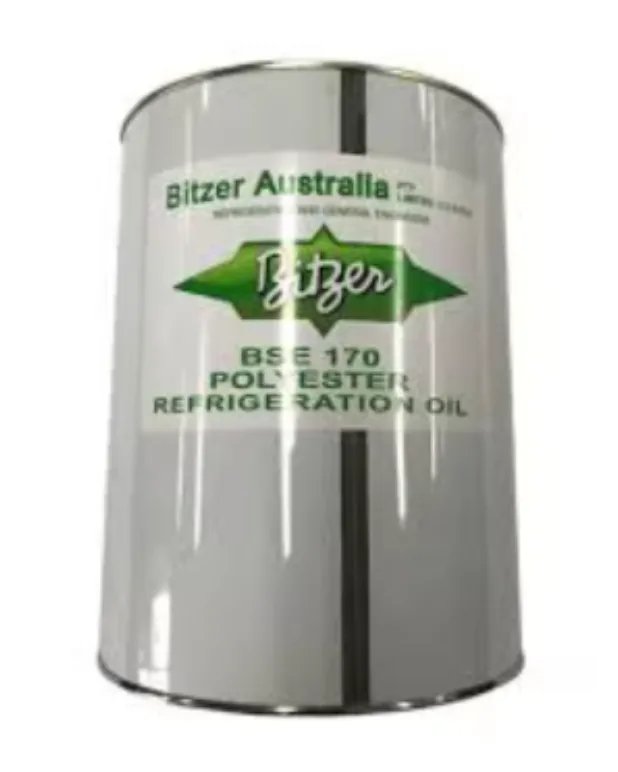
POE Oil
Polyolester oil is commonly associated with various HFC refrigerants. It is highly hygroscopic, meaning it absorbs moisture from the surrounding air quickly. Containers should remain sealed, and exposure during servicing should be kept as short as possible.
PAG Oil
Polyalkylene glycol oil is widely associated with automotive air-conditioning and selected specialised systems. Different PAG viscosities are available, so the correct grade must be confirmed before use.
Why Viscosity Is Important
Oil that is too thick may not circulate or return properly at low evaporating temperatures. Oil that is too thin may fail to maintain an adequate lubricating film at high compressor temperatures.
The required viscosity depends on factors such as:
- Compressor design
- Refrigerant type
- Operating temperature
- System capacity
- Manufacturer specification
- Application and duty cycle
For cold rooms and commercial freezers operating around Chandigarh, Mohali, and Panchkula, low-temperature oil behaviour deserves particular attention.
Moisture Is a Serious Concern
Moisture contamination can reduce lubricant quality and contribute to acid formation. This may damage motor windings, bearings, valves, and internal metal surfaces. POE oils demand especially careful storage because they readily absorb atmospheric moisture.
Oil containers should be tightly closed and stored in a clean, dry area. Partly used oil should not be left uncovered or transferred into unlabelled containers.
When Oil May Need Attention
A system does not require oil simply because it has lost refrigerant. Adding oil without confirming the existing quantity can result in an excessive charge, which reduces heat-transfer efficiency and may cause operational problems.
Oil inspection becomes relevant after:
- Major refrigerant leakage
- Compressor replacement
- System flushing
- Burnout or severe contamination
- Oil trapping in long pipework
- Significant changes to system configuration
Discoloured oil, burnt odour, acid formation, or metallic contamination can indicate a more serious internal problem. In such cases, changing oil alone may not resolve the underlying cause.
The safest selection method is to follow the compressor manufacturer’s approved oil type and viscosity. Correct lubricant handling helps preserve compressor reliability, especially in commercial refrigeration systems expected to operate for long hours during North India’s demanding summer conditions.
Keywords