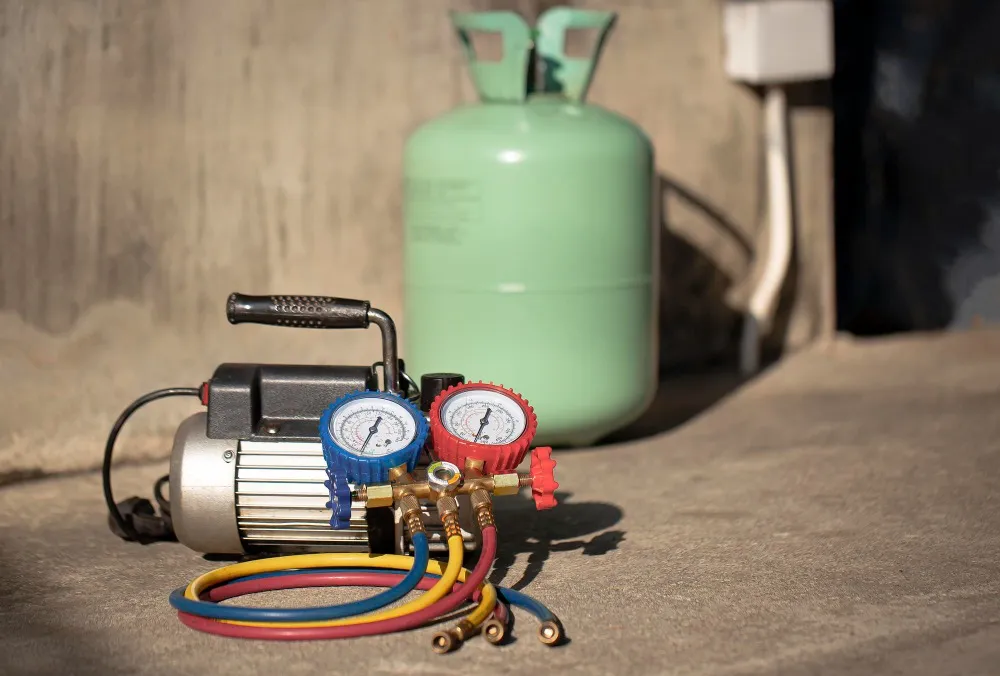
Pressure pumps are used in selected air-conditioning and refrigeration servicing tasks, including pressure testing, flushing, descaling, and transferring compatible fluids. Since these activities involve different pressures and materials, buyers must identify the exact application before selecting a pump.
Mahesh Refrigeration Company caters to refrigeration technicians, service contractors, facility teams, and commercial cooling businesses. Choosing a pressure pump with the correct rating and construction can make maintenance safer while preventing damage to pipes, coils, seals, and system components.
What Is a Pressure Pump Used For?
The term “pressure pump” can refer to more than one type of service tool. A manual or powered test pump may be used to check whether pipework or a closed circuit can hold a specified pressure. A flushing pump circulates cleaning fluid through a coil or pipe section. Other pumps may be designed for fluid transfer or system cleaning.
These tools are not automatically interchangeable. A pump intended for water pressure testing should not be used with refrigerant, oil, acid-based cleaning chemicals, or other fluids unless the manufacturer specifically approves that application.
Manual and Electric Pressure Pumps
Manual pressure pumps are operated by hand. They are portable, require no external power supply, and allow gradual pressure control. They may be suitable for smaller circuits, occasional testing, and locations where electricity is unavailable.
Electric pressure pumps can build pressure or circulate fluid more quickly. They are useful for repetitive work, larger circuits, and cleaning operations requiring continuous flow. However, the pump must include suitable pressure control and be compatible with the working fluid.
The decision should be based on circuit size, testing frequency, required pressure, portability, and the level of control needed.
Selecting Pressure Pumps in Chandigarh Tricity
Commercial facilities in Chandigarh, Mohali, and Panchkula use a wide range of cooling equipment, from small air conditioners to cold rooms, chillers, and process-cooling systems. A technician servicing a compact AC installation may require a different pump from a maintenance team cleaning a large water-cooled condenser.
Local water quality can also contribute to mineral deposits in water-based heat exchangers. Where descaling is required, the pump, hoses, seals, and reservoir must tolerate the chosen cleaning solution.
Important Specifications to Compare
Before selecting a pressure pump, check:
- Maximum working pressure
- Flow rate
- Manual or powered operation
- Reservoir capacity
- Hose and connector sizes
- Pressure gauge range
- Seal and body material
- Fluid or chemical compatibility
- Pressure relief arrangement
- Availability of spare seals and hoses
The pressure gauge should provide a readable range around the intended test pressure. A gauge with an excessively high range can make small pressure changes harder to observe.
Pressure Testing and Leak Detection
Pressure testing should be carried out at the level specified for the equipment and piping. Exceeding the allowable pressure can damage coils, service valves, fittings, or safety components.
Dry nitrogen is commonly used for refrigeration circuit pressure testing with an appropriate regulator and rated equipment. Oxygen or compressed air should not be introduced into circuits containing refrigerant oil because unsafe reactions can occur under pressure.
Soap solution, electronic leak detectors, and pressure stability observations can help locate or confirm leakage. Temperature changes should also be considered because they can influence pressure readings.
Avoiding Damage During Flushing or Descaling
Cleaning chemicals must be compatible with the metal being treated. A solution suitable for one material may corrode another. The system should be isolated, and sensitive controls or components should be protected from chemical exposure.
After circulation, the circuit may require neutralisation and thorough rinsing. Waste fluid should be collected and handled appropriately rather than discharged carelessly.
Pressure pumps are useful only when matched to a defined task. Confirming the working fluid, required pressure, flow rate, and component materials helps buyers choose a tool that supports accurate testing and effective maintenance.
Keywords