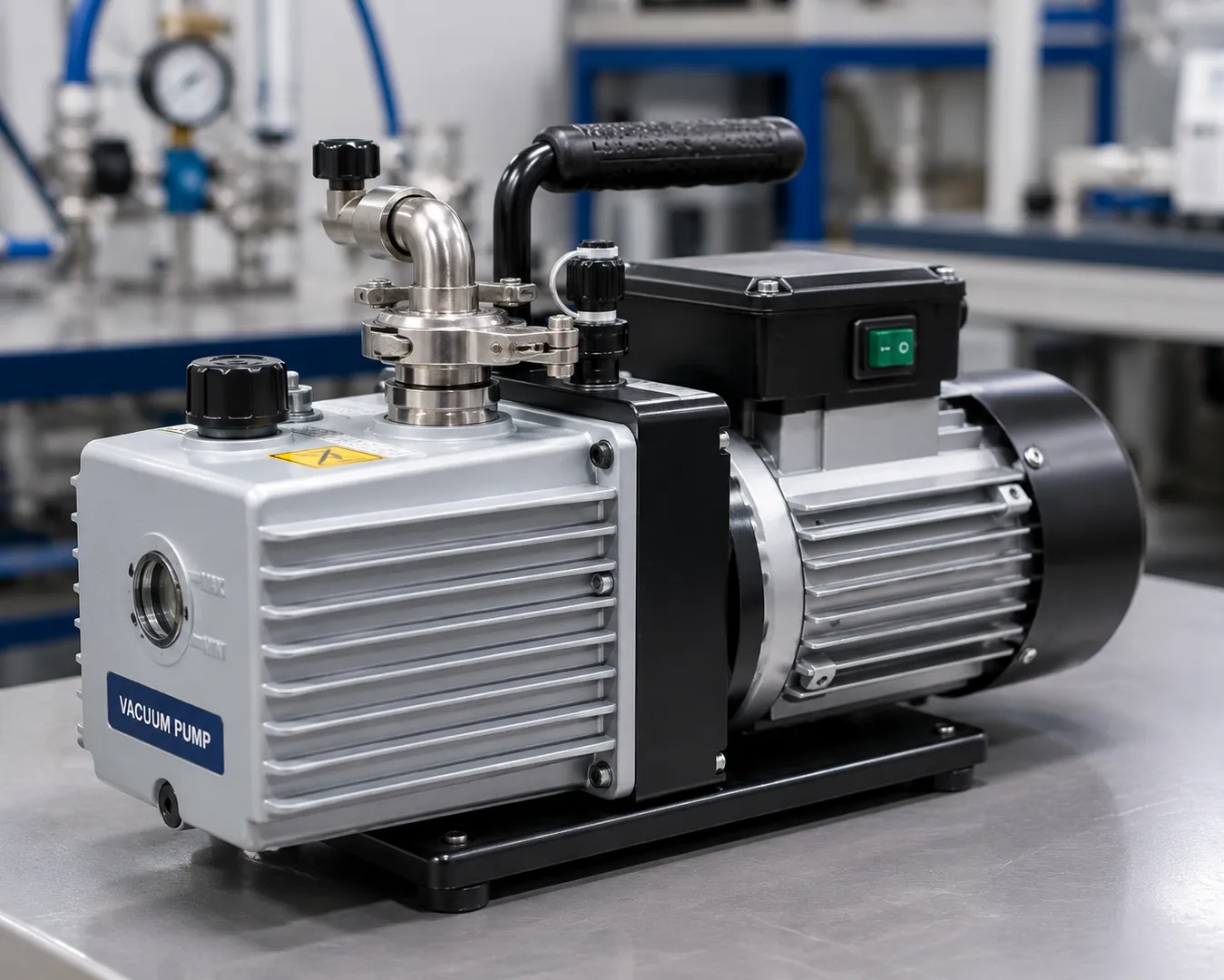
A vacuum pump removes air, moisture, and other non-condensable gases from an air-conditioning or refrigeration circuit before refrigerant is charged. This evacuation step is critical because trapped moisture can contribute to acid formation, ice blockage, unstable pressure, and compressor damage.
Mahesh Refrigeration Company assists AC technicians, refrigeration contractors, and maintenance professionals in selecting tools suited to their applications. When comparing vacuum pumps for AC and refrigeration work, pumping capacity alone should not be the deciding factor.
Single-Stage Versus Two-Stage Vacuum Pumps
A single-stage pump uses one compression stage to evacuate a system. It can be suitable for smaller systems and general service applications where the required vacuum level is moderate.
A two-stage pump passes the gas through two compression stages. It can generally achieve a deeper vacuum and is often preferred for commercial refrigeration, larger systems, and installations where thorough moisture removal is important.
The right choice depends on system volume, operating conditions, and the target vacuum recommended by the equipment manufacturer.
Understand Pumping Capacity
Vacuum pump capacity is commonly expressed in cubic feet per minute or litres per minute. A higher capacity pump can evacuate a larger system faster, but an oversized pump does not correct poor servicing practices.
Restrictions caused by narrow hoses, valve cores, leaking connections, or small service ports may slow evacuation even when a powerful pump is used. Hose arrangement and system preparation are therefore as important as rated pump capacity.
Choosing a Vacuum Pump in Chandigarh Tricity
AC and refrigeration technicians in Chandigarh, Mohali, and Panchkula work under hot and seasonally humid conditions. Moisture can enter open pipework during installation or repair, particularly when components remain exposed for extended periods.
Commercial cold rooms, supermarket refrigeration equipment, and central air-conditioning systems usually contain more pipework than domestic units. These applications may benefit from a two-stage pump with appropriate capacity, large-diameter vacuum hoses, and a reliable vacuum gauge.
Vacuum Level and Micron Measurement
Manifold gauge readings alone are not precise enough to confirm a deep vacuum. A micron gauge measures the actual vacuum level and helps determine whether moisture or a leak remains in the system.
A system that reaches the target vacuum but quickly rises after isolation may have a leak, trapped moisture, or both. Holding the vacuum for a suitable period provides more useful information than simply running the pump for a fixed number of minutes.
Features Worth Comparing
Before buying a vacuum pump, evaluate:
- Single-stage or two-stage operation
- Pumping capacity
- Ultimate vacuum rating
- Motor power and electrical supply
- Oil capacity and oil-level indicator
- Inlet connection sizes
- Weight and portability
- Exhaust design
- Availability of replacement oil and accessories
A compact pump may be convenient for residential service visits, while a heavier-duty model can be more appropriate for workshop or commercial use.
Maintenance Directly Affects Performance
Vacuum pump oil absorbs moisture and contamination during operation. Dirty or cloudy oil reduces the pump’s ability to achieve a deep vacuum. Oil should be checked regularly and replaced according to operating conditions and manufacturer guidance.
The inlet should be capped during storage to prevent dirt and moisture from entering. Hoses, seals, and fittings must also remain clean and leak-free.
Mistakes That Reduce Evacuation Quality
Using charging hoses with small internal diameters can make evacuation unnecessarily slow. Leaving valve cores in place may create further restrictions. Another common mistake is treating evacuation as a leak test; a pressure test should normally be completed separately before the vacuum process.
A properly selected and maintained vacuum pump protects the system from invisible contamination. Buyers should compare achievable vacuum, system size, service frequency, and practical field requirements rather than judging a pump only by motor size or evacuation speed.
Keywords